
The Hunting Ground Methodology for External Innovation
Imagine a global manufacturing incumbent — let’s call them GlobalTechX. In 2018, facing mounting pressure from competitors, GlobalTechX’s executive team launched an ambitious “Open Innovation” initiative. They established an outpost in Silicon Valley, sponsored pitch competitions, and launched a corporate venture fund.
Within two years, they had engaged with over 200 startups, generated 50 proof-of-concept pilots, and collected a mountain of press releases. Yet, the commercial return on this massive investment was negligible. GlobalTechX had fallen victim to a phenomenon industry observers term “innovation theater.” They had built an impressive funnel for inbound ideas but lacked the strategic architecture to translate those ideas into core business value.

For much of the twentieth century, companies like General Electric, AT&T, and DuPont built sprawling internal R&D empires, employing thousands of scientists to generate breakthroughs entirely in-house. Today, as that model has eroded, leading enterprises have systematically shifted investment toward external partnerships, technology scouting, corporate venturing and acquisitions. Yet despite this widespread adoption, the failure rate of these endeavors remains staggeringly high. Recent research from BCG reveals that roughly 80 percent of companies report receiving less value from their partnerships than they invested[1]. The culprit is rarely a lack of ambition; it is a lack of structure.
The End of “Spray and Pray”
The prevailing approach to external innovation is fundamentally compromised by its own design. Popularized following Henry Chesbrough’s foundational 2003 framework[2], conventional open innovation often devolves into a “spray and pray” philosophy: casting a wide net to capture raw concepts, serendipitous discoveries, and inbound pitches from across the ecosystem.
When organizations lack targeting parameters, they are flooded with disparate technologies, misaligned pitches, and peripheral opportunities that consume resources without delivering measurable commercial impact.
The result is a collapse of the signal-to-noise ratio. When organizations lack targeting parameters, they are flooded with disparate technologies, misaligned pitches, and peripheral opportunities that consume resources without delivering measurable commercial impact.
To survive and lead in their markets, organizations must abandon the aspiration of open innovation and embrace the discipline of the “hunting ground” approach. This methodology filters out noise and directs every external engagement toward targets that guarantee strategic alignment and quantifiable commercial return.
The Hunting Ground Methodology: Focus Over Breadth
A “hunting ground” is a well-defined, strategically bounded domain, a specific technical gap, application space, or capability deficiency, in which an organization deliberately focuses its external innovation efforts.
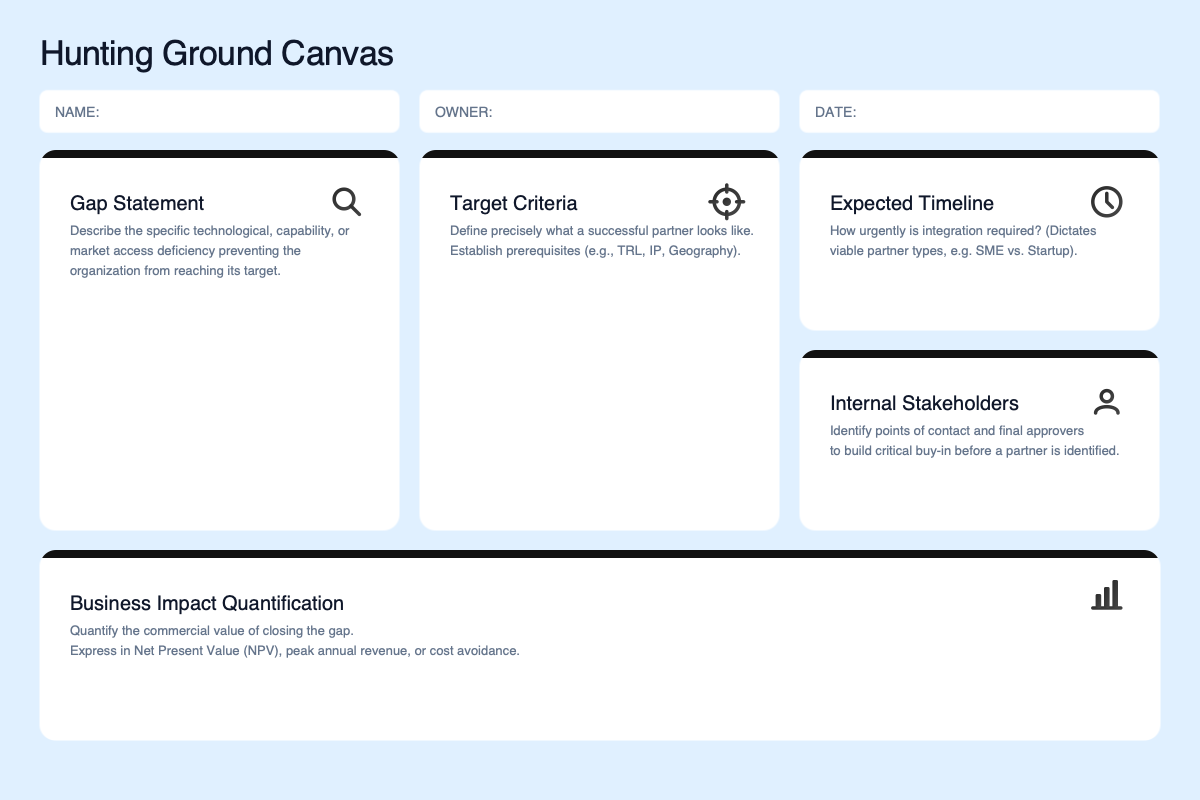
Figure 1. A one-page hunting ground canvas. The illustrations from this article are available for download below.
Unlike open innovation’s indiscriminate inbound model, hunting grounds impose purposeful constraints that transform the search from reactive to proactive, and from speculative to commercially anchored. These hunting grounds are formulated collaboratively with existing or future business unit leaders to bridge the gap between executive strategic intent and operational execution. Hunting grounds are typically owned by technology scouts.
A typical hunting ground is documented on a single structured page (see Figure 1) comprising five essential components:
- Gap Statement: A gap analysis identifies the delta between the organization’s current state and its target competitive position. Well formed gap statements also define the consequences of not taking action which helps weigh the investment range and focuses the scouting team, highlights urgency and grounds the stakeholders.
- Target Criteria: This establishes non-negotiable prerequisites like technical readiness levels (TRL), geographic constraints, IP ownership clarity, and regulatory compliance status. Criteria should address partner-side engagement factor: commercial terms expectations, exclusivity position and co-development considerations.
- Expected Timeline: Clear parameters define how urgently integration is needed, which dictates what types of partners are viable (e.g., a 12-month deployment requires a mature small-to-medium enterprise or corporate; a 5-10 year horizon opens the aperture to early-stage ventures). The timeline should also specify what happens if the window closes without an identified solution, will the hunting ground be renewed, escalated or will other efforts take priority
- Internal Stakeholders: Identifying internal points of contact and approvers early builds vital buy-in before a partner is identified, dramatically reducing adoption friction later.
- Business Impact Quantification: Every hunting ground must quantify the commercial value of closing the gap, typically expressed as estimated Net Present Value (NPV), peak annual revenue potential, or cost avoidance. This metric anchors the program in financial reality and calibrates resourcing accordingly.
When an incumbent articulates elements of specific hunting grounds to relevant innovation ecosystem, it attracts the external partners needed to solve those challenges, generating ecosystem pull that reduces search costs and compresses time to engagement.
The Partner Ecosystem and Managing the Three Horizons of Impact
One of the most consequential misconceptions in external innovation is that the relevant partner universe consists primarily of startups. This assumption is both strategically limiting and operationally costly. A mature hunting ground program draws from a rich, heterogeneous ecosystem encompassing SMEs, established corporates, universities, research institutes, startups, and venture studios. Furthermore, the vehicles for engagement are just as varied, ranging from simple research agreements, licensing agreement, and supplier alliances to joint development, co-creation, and joint ventures.

Startups excel at developing novel capabilities. When Bosch created its dedicated venture client unit, GROW, it operationalized this logic: purchasing startup solutions as an early commercial customer before making any equity commitment. This reduced financial exposure while accessing frontier capabilities at speed.
Established corporates, however, represent a systematically underutilized category. Cross-industry collaborations frequently unlock non-obvious value. Michelin’s partnerships with digital logistics providers and BMW’s co innovation agreements with software companies illustrate how incumbents can access transformative capabilities without dilutive equity positions.
A persistent and damaging misconception about external innovation is that it exists primarily to build future businesses, often at the expense of the core. In practice, a well-designed hunting ground program generates value across the entire business portfolio
A persistent and damaging misconception about external innovation is that it exists primarily to build future businesses, often at the expense of the core. In practice, a well-designed hunting ground program generates value across the entire business portfolio, including Core Business Enhancement (Short-Term Impact), Adjacent Business Growth (Medium-Term Impact), and Transformational Business Creation (Long-Term Impact).
Executing the Strategy: Filtering the Noise
Once hunting grounds are established, organizations must employ a rigorous evaluation framework to separate the signal from the noise. One of the most effective mechanisms is a Target Downselection Matrix modeled after the Ansof-matrix (see Figure 2), a structured tool that plots potential partners across two critical axes based on the hunting ground’s specific criteria:
- Technology Fit (X-Axis): Evaluates technical capabilities, readiness levels, integration potential, and other elements as specified in the hunting ground.
- Business Fit (Y-Axis): Evaluates commercial viability, addressable market size, organizational capacity, and other elements as specified in the hunting ground.
The matrix applies equally across all partner types. A Series A startup, a mid-market SME, and a university spin-out can all be evaluated through the same framework. The mandate is unambiguous: advance only those partners that occupy the upper right quadrant (high business fit and high technology fit). Everything else is eliminated as noise, quickly and without sentiment. Important to mention that the matrix is populated iteratively, it needs enough signal to direct the team’s attention and justify deeper investigation before significant time is committed.
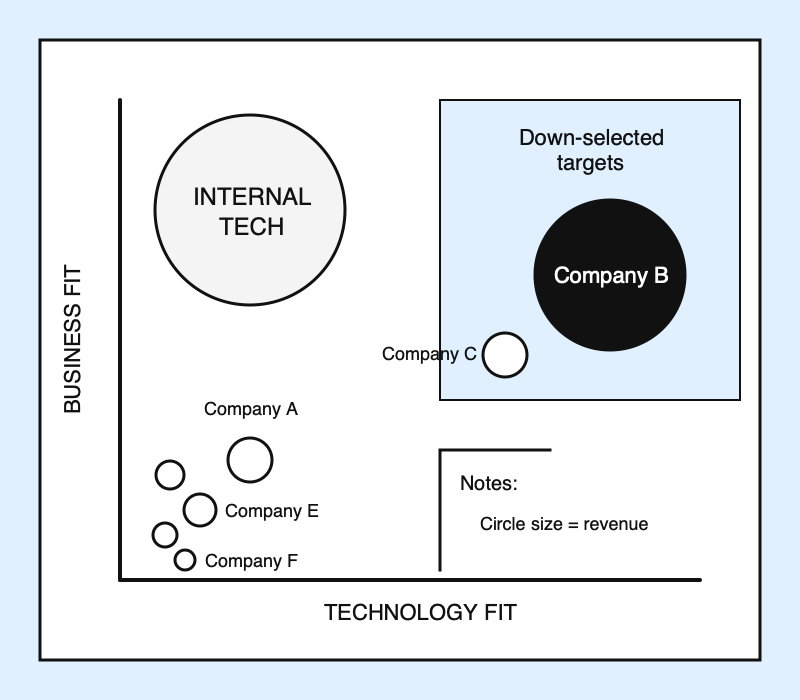
Figure 2. Technology fit vs. business fit plot for down-selecting targets as per hunting ground criteria (modified Ansoff Matrix).
Measuring What Matters
To govern a diversified portfolio of external collaborations, organizations must move beyond legacy performance tracking. Traditional R&D metrics, like patent counts, publication rates, and headcount, are inadequate proxies for external innovation value. The solution is a dedicated External Innovation Dashboard providing executive level visibility.
A dashboard tracks elements such as (see Figure 3):
- Active vs. Closed Hunting Grounds: Tracks the lifecycle and velocity of strategic focus areas. A healthy innovation engine continuously opens new hunting grounds as market gaps emerge, while decisively closing others once a capability is integrated or a strategic priority shifts.
- Portfolio Value at Stake: The aggregate quantified Net Present Value (NPV) or revenue potential, segmented by both active and successfully closed hunting grounds.
- Strategic Alignment Score: The proportion of total external engagements that are directly traceable to defined and closed hunting grounds, ensuring rogue “spray and pray” projects are minimized through periodic audit of active engagements versus the hunting ground.
- Pipeline Quality Ratio: The percentage of scouted opportunities that successfully pass the downselection matrix thresholds within closed hunting grounds, indicating the precision of the initial targeting.
- Time to Market: The measurable reduction in deployment timelines achieved through external partnerships versus internal development (measured upon closing a successful hunting ground).
- Target Funnel Distribution: Provides a granular view of the partnership pipeline. Monitoring the number of active targets across scouting, assessment, collaboration, and deals allows leaders to identify bottlenecks and forecast near-term commercial impact.
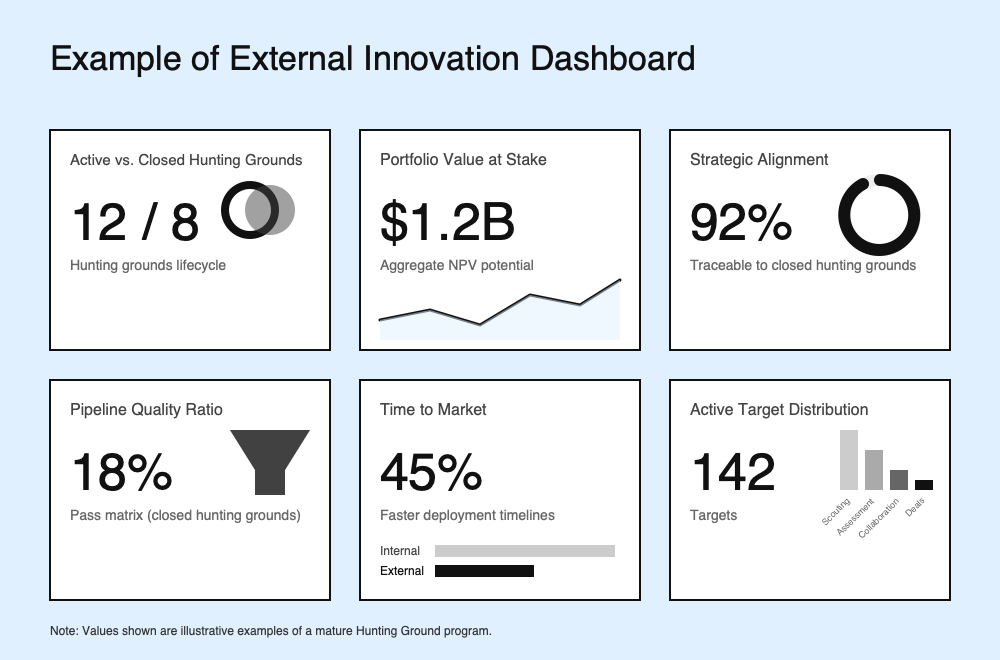
Figure 3. Example of external innovation dashboard. The illustrations from this article are available for download below.
The era of unstructured innovation is over. The enterprises that continue to cast wide nets, hoping serendipity will surface the next breakthrough, are ceding strategic ground to organizations that have mastered the discipline of targeted, thesis-driven external innovation.
For innovation practitioners and business leaders, the imperative is clear: replace the aspiration of open innovation with the discipline of the hunting ground. Define your gaps with precision. Quantify your stakes. Engage the full ecosystem through the right vehicles. Measure ruthlessly. And build the organizational capability to repeat this cycle continuously.
The organizations that master this architecture will not merely respond to disruption. They will define it.
Ranjan Dash is an Advisor at Early Charm Ventures LLC, Dynalene Inc, and FutureBridge. He is an Innovation Executive specializing in the commercialization of high-impact opportunities and external innovation. Ranjan received his Ph.D. and MBA from Drexel University, and he has over 20 years of industrial experience spanning corporate innovation, manufacturing, and entrepreneurial ventures.
Jan Henk Kamps is Chief Scientist for Product Technology in SABIC’s Specialties Business Unit. He leads product and technology development activities across multiple specialty businesses and focuses on technology strategy, incubation, and the identification of emerging technologies and market opportunities that can drive future growth through advanced materials and specialty products.
[1] Khubchandani, R., Gore-Randall, E., Capturing the Value of Joint Ventures, Boston Consulting Group, 2024. Available at: https://www.bcg.com/publications/2024/capturing-and-optimizing-joint-venture-value
[2] Chesbrough, Henry William. Open Innovation: The New Imperative for Creating and Profiting from Technology. Boston: Harvard Business School Press, 2003.